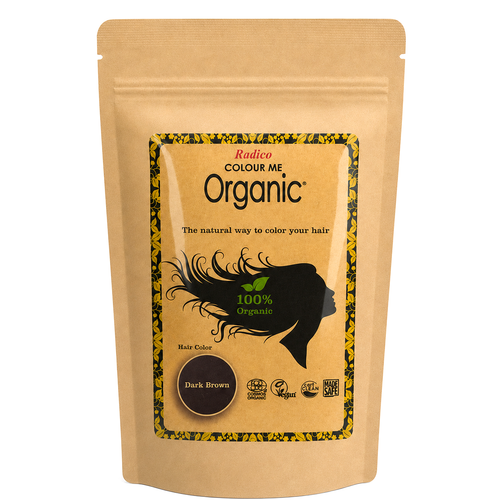
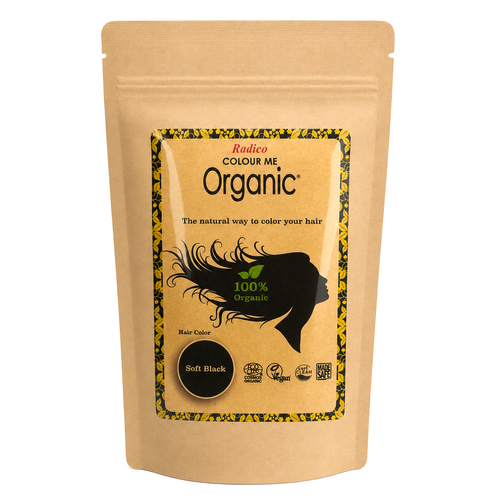
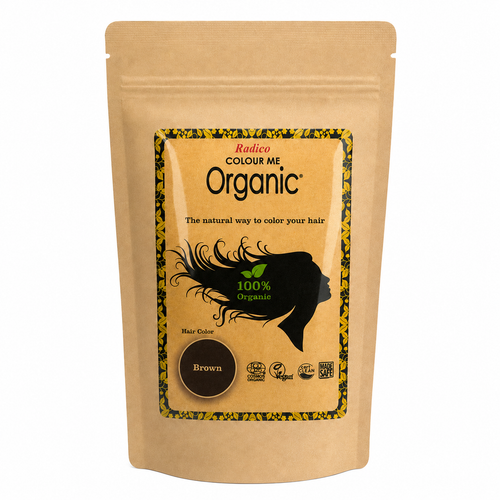
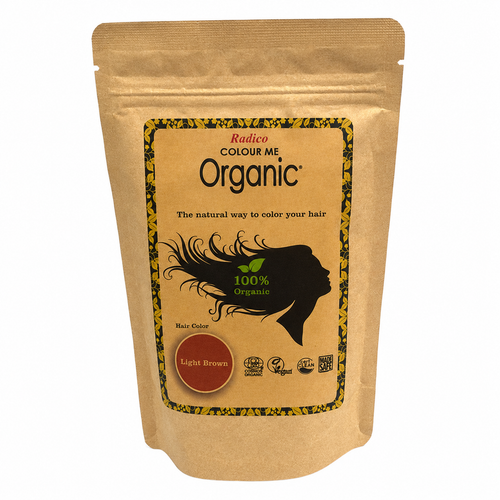
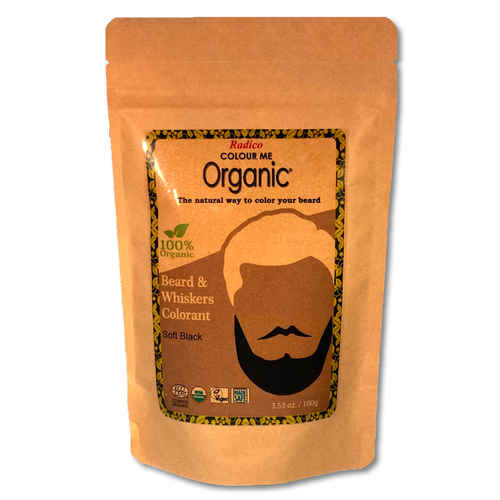
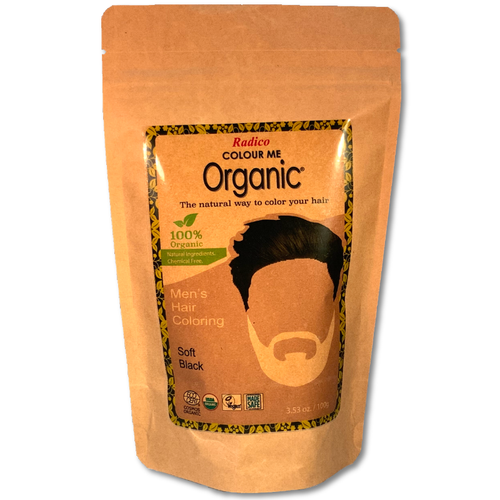
100% Organic Hair Color
Colour Me Organic
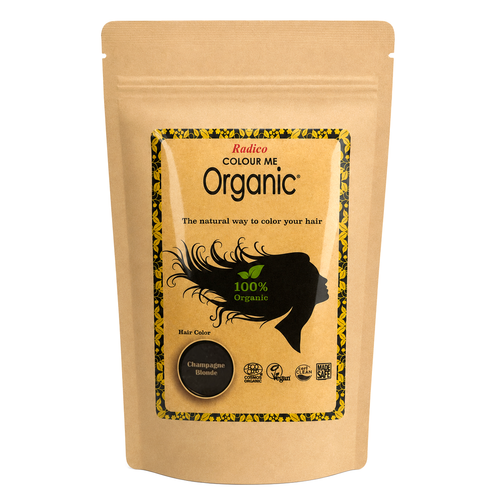
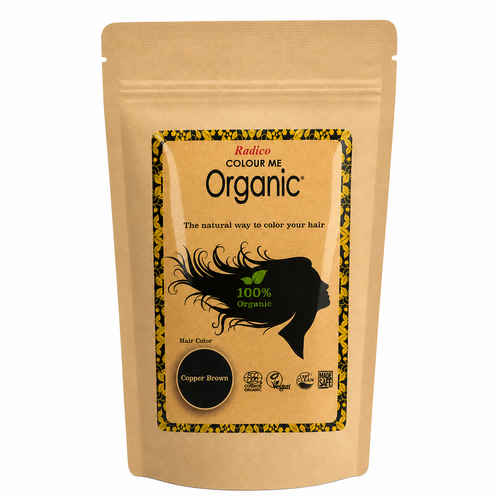
24 shades, all made the same way: certified organic herbs ground into powder. Add water, apply, done.
Certified by ECOCERT since 2012.
The Shade Range
24 Shades.
Zero Chemicals.
Henna alone gives you one color: reddish orange. Blended with indigo, manjistha and hibiscus, it reaches 24 — from Soft Black to Sun Blonde. No ammonia, no PPD, no peroxide.
- ECOCERT Certified
- 100% Organic
- Vegan
- Since 2012
Pick Your Shade
Hover to preview · click to shopTap a shade to see it above
Still deciding?
See all 24 shades photographed on real hair, laid out side by side so you can spot the difference between close tones.
Avoiding a particular plant?
If you need to leave one ingredient out — because of a reaction, or because you don't want the tone it brings — these two collections are grouped by what they omit.
Real Results
Plants Really Do Color Hair.
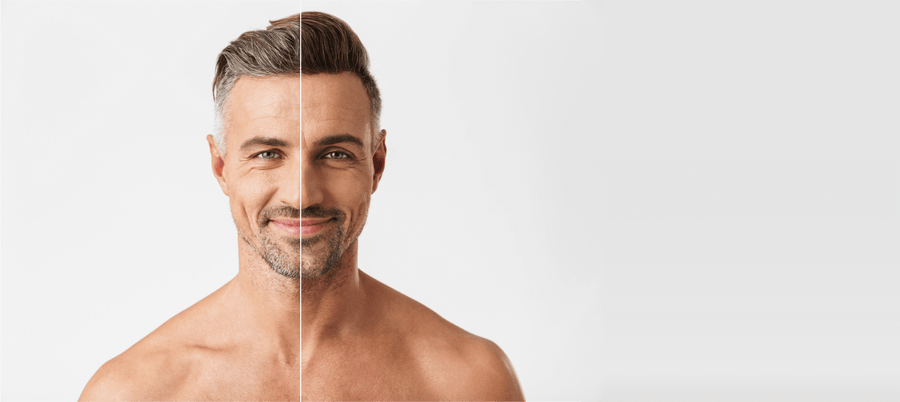
Every photo below is a customer's own result, shared on Instagram — including gray coverage.
How the herbs are balanced changes how each shade behaves — see what that means for yours →
Photo by @ecohairhanna
Photo by @wakuorganics
30% Gray Covered
Photo by @salong_naturnara
Photo by @tuulanhiukset
Photo by @merry.fi
Photo by @ecohairhanna
30% Gray Covered
Photo by @arohatiina
Photo by @hiljaekokamamo
Photo by @merry.fi
40% Gray Covered
Photo by @naturalhairbyjofa
10 customers · Results vary with natural hair color, gray percentage, and porosity
Shop hair color →How It Works
Something Gets Oxidized Either Way.
The Question Is Whether It's Your Hair.
Radico oxidizes too — that's how indigo keeps deepening for two days after you rinse. So the difference isn't whether a reaction happens. It's what the reaction is spent on. Conventional permanent color spends it on your melanin and your keratin. Radico spends it on plant pigment sitting on the outside of the strand.
Conventional Permanent Color
Reacts Inward
The reaction is placed inside your strand
Radico Colour Me Organic
Reacts Outward
The reaction happens on the surface, in air
Hydrogen peroxide oxidizes the melanin inside your strand — and it doesn't stop there. It also converts the cystine bonds that hold keratin together into cysteic acid.
Cysteic acid build-up and cuticle loss are, chemically, what ageing hair is. Conventional color produces both in about two hours, and the effect accumulates with every application over the years.
The oxidation happens to the henna and indigo you applied — not to you. After you rinse, the pigment left on the surface darkens as it reacts with air over roughly 48 hours.
Your own melanin is never a reactant. It's the base the color sits on.
Ammonia raises the pH to swell the cuticle so dye precursors can reach the cortex. The reaction is deliberately placed inside the fibre, because that's where it has to be for the color to be permanent. The cuticle does not close back the way it was.
Nothing forces the cuticle open, because nothing needs to get in. The paste works against the outside of the strand, and pigment binds to keratin there.
The trade-off: surface binding is why Radico needs one to two hours on the hair, where a conventional permanent color is finished in about thirty minutes. It's still a single application, though — the shades are pre-blended, so there's no separate henna step first.
PPD and related precursors arrive colorless and develop only once peroxide oxidizes them. They are also a common trigger of hair dye allergy, which is why a patch test is standard.
Twelve herbs across all 24 shades: henna leaf, indigo leaf, colorless henna, manjistha root, hibiscus flower, turmeric root, amla fruit, reetha fruit, shikakai seed, bhringraj leaf, brahmi leaf and methi seed. Amla is among the most polyphenol-rich botanicals used in hair care. You add water. Nothing else goes in.
What Radico can't do: it cannot lighten hair. Lifting color requires bleaching, and bleaching requires peroxide. Every shade works with your natural base rather than against it.
Coloring for the first time? Then there's nothing to undo yet — which makes this the easiest possible place to start. The damage on the left is cumulative, so the version of it you never begin is the one you never have to repair.
You don't have to take our word for any of this. What's in the box is on the label, and the label is audited. Radico's shades are pre-blended, so coloring is one application rather than the two-part henna-then-indigo routine. In 2012 it became the first single-step hair color certified COSMOS ORGANIC by ECOCERT, under a standard that checks the ingredients and the process, source to shelf.
In the directory, enter Radico in the Company field to see the certification held for each individual product.
Powder. Water. And Time.
No mixing bottles, no burning scalp — just a paste and a couple of hours.
-
Mix with water Certified organic plant powder becomes a smooth paste. That's the whole prep — the shade is already blended for you.
-
Apply to hair The paste coats each strand from root to tip. No fumes, no stinging.
-
Rinse and let it settle Color keeps deepening over the next 48 hours as the pigment develops in air.
What you're watching: the paste never goes into the strand. Pigment binds to keratin at the surface, and the only thing still reacting after you rinse is that pigment, darkening in air. No peroxide reaches your melanin, and no ammonia swells the cuticle.
See the full instructions → New to coloring? The guide walks through the whole thing — plus timings for your exact shade, since browns finish fastest and ash tones take longest.The Front Shelf
The Ten Most Chosen
Out of 46 products, these are the ten our customers order most often.
Free shipping over $25.00 · Ranked by number of separate orders, not units sold
24 Organic Shades
Find Your Shade
The Formula
Every Shade Is a Recipe
There is no dye in the pouch — only ground plants. Pick a shade to see exactly which ones are in it, and what each is doing in the blend.
What it does in the blend
Before and After the Colour
Two Products, Two Opposite Jobs
Neither of these is a daily shampoo, and we'd rather explain what each one is for than sell you both. One strips, one settles — and the difference between them is measurable on a pH meter.
Where our products sit
Our own readings, on a handheld meter. Hair's own surface is included for reference.
Everything else we make sits on the acid side, because that's where you want a wash you use regularly. The bar is the one exception, and that is the whole point of it.
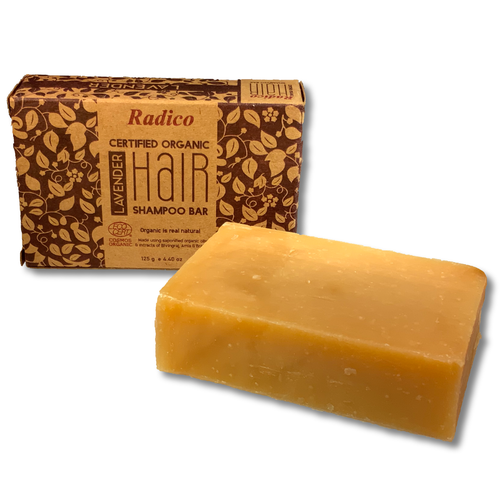
Organic Shampoo Bar
A true soap — five organic oils saponified, the way soap has been made for centuries. Its job is to strip. Conventional shampoos and conditioners leave silicone and polymer film behind, and plant pigment cannot bind through a film. One wash with this before you colour, and it's gone.
What we're less sure about: you'll read that alkalinity opens the cuticle so pigment binds better. Alkaline conditions do lift cuticle scales. Whether that measurably improves the result, we don't know — we haven't found a study, and we haven't run one. The residue is the part we're confident about.
Not for daily use, and not for 72 hours after colouring. Contains almond oil (a tree nut) and lavender oil, a known contact allergen. Don't use it if you react to either.
Tap an ingredient
Hair Treatment Powder
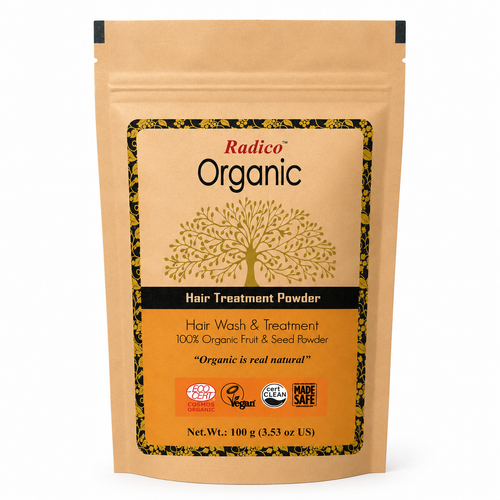
Three fruits ground together — amla, reetha and shikakai. Reetha and shikakai carry saponins, which wash without a detergent. Its other job is acidity: after an alkaline wash, cuticle scales stand up and hair catches on itself. An acid rinse brings them back down.
An old pairing, not a new idea. Soap followed by an acid rinse is how hair was washed for a very long time before pH-adjusted shampoo existed. Mix it thin as a rinse, or thick as a fifteen-minute treatment — either brings the pH down.
What we don't claim: that it promotes growth, prevents greying, or delivers vitamins into the hair. It's a wash and an acid rinse made from three certified organic fruits.
Tap an ingredient
We Show Every Review
Good and Bad
Read unfiltered feedback from real customers to help you decide. Our Judge.me certification guarantees 100% of verified reviews are published—so you get the full picture before you buy.
3.9 out of 5 stars · 147 verified reviews
Let customers speak for us
Why Choose Radico
The Only Hair Color That
Colors and Protects at Once
In 2012, Radico became the world's first hair color brand certified COSMOS ORGANIC by ECOCERT—verifying not just our ingredients, but our entire process, source to shelf.
Organic Hair Color
Herbal Craft
Worldwide
One Year, No Promos
Tap a certification to learn more
What's Not in the Pouch
Every ingredient below is common in conventional hair color—and absent from Radico.
Tap any ingredient to see why we left it out
New to Herbal Hair Color?
Read This First
Chemical Dyes
Long-lasting,
but damage hair
Natural Rinses
Gentle,
but fade in weeks
Radico
Lasting color,
zero damage
Organic plant pigments—henna, indigo, amla—form a direct bond with your hair's protein structure. Color that holds, without the chemistry that causes damage.
For Dark Shades: Why Color Sometimes Comes Out Warm
Dark shades contain both henna and indigo. Indigo takes 2 to 3 days to fully develop. If hair lacks sufficient moisture during application, development stops early—leaving warmer, reddish tones. This is not a product defect. It's a natural process that simply needs adequate moisture to complete.
Green
Blue
Deep Black
Color came out warmer than expected?
We'll send the same shade or deeper—free of charge.
Shade isn't the right match?
We'll find the correct shade—or refund your purchase.
No conditions. No expiration.
Before Your First Application
How to Do a Strand Test
Why test first? Radico contains zero chemical additives to force a fixed result—so the final color depends on your hair's unique condition. And because plant pigments bond directly to the hair, the color holds for about a month once set. One small test tells you exactly what to expect, before you commit.
Six Simple Steps
-
Open the pouch Inside, open the inner bag containing the herbal hair powder.
-
Mix a small amount Blend a spoonful of powder with warm water until it reaches the softness of ketchup or yogurt.
-
Apply to a hidden strand Choose a discreet section of hair—behind the ear or under the top layer works well—and coat it with paste.
-
Wrap it Cover the strand with kitchen wrap to keep the paste from drying out. Moisture is what lets the color develop.
-
Wait one hour, then rinse After 60 minutes, rinse the paste away thoroughly in the shower.
-
Air-dry naturally Skip the blow dryer—forced drying stops the color from developing. Natural drying keeps the moisture the pigment needs.
Remember: dark shades keep developing for 2–3 days. Judge your final color after day 3, not day 1.